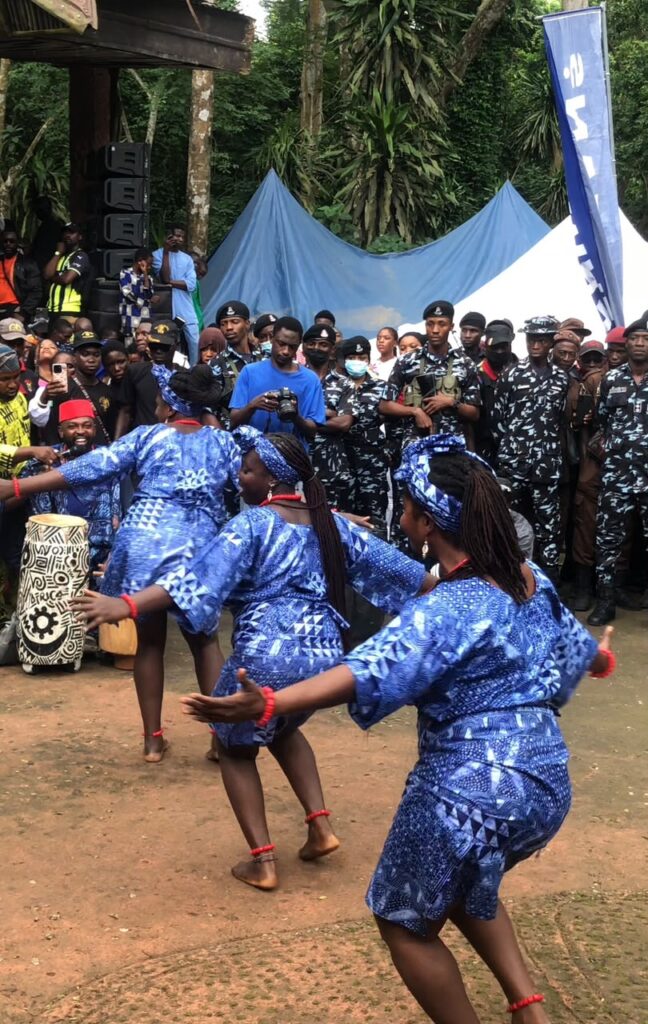
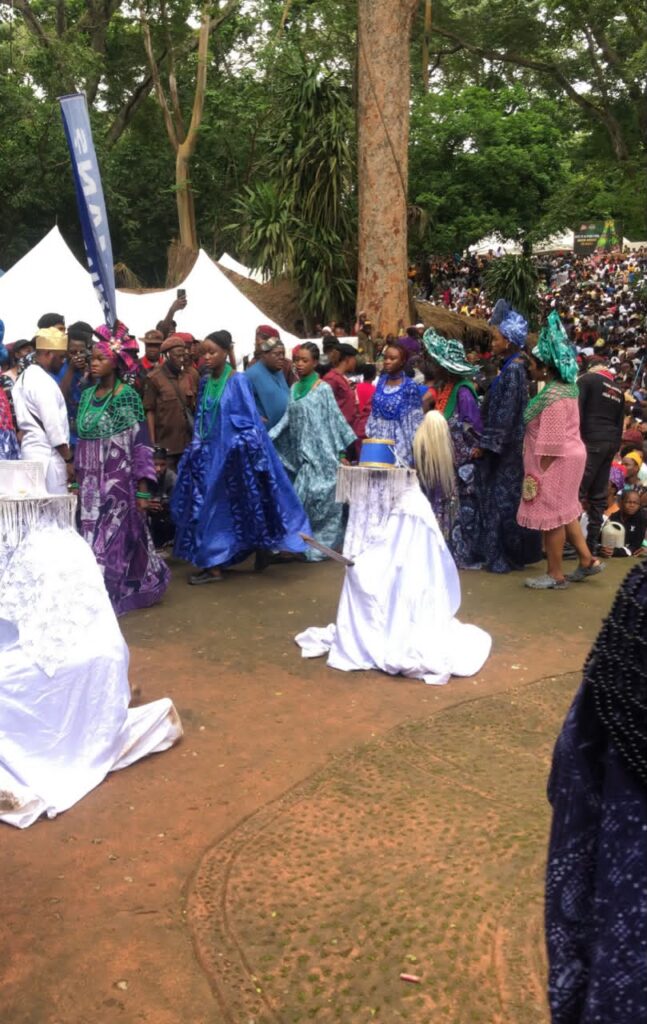
Discover why the Nike Art Dance Troupe from Lagos performed the Eyo Dance at the Osun-Osogbo Festival and learn about cultural exchange, Yoruba heritage and cultural tourism in Nigeria.
What Is Adamu Olorisa Doing in Osun?
A comment recently appeared under a video I shared of the Nike Art Dance Troupe performing at the Osun-Osogbo Festival:
“What is Adamu Olorisa doing in Osun?”
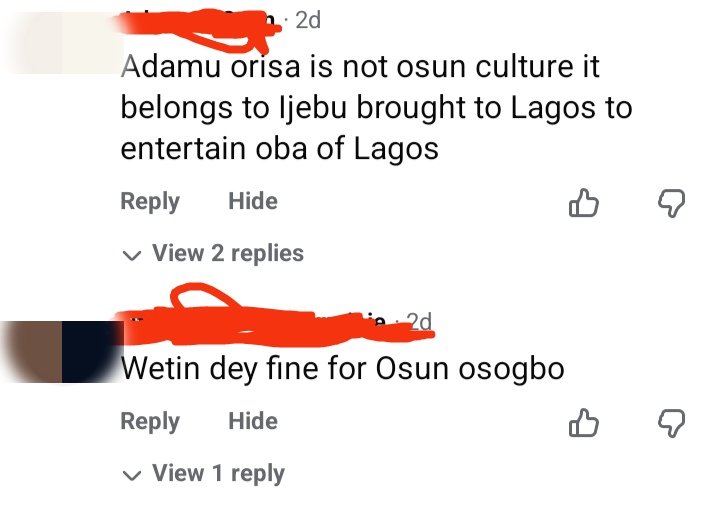
Rather than seeing the question simply as a criticism, I see it as an opportunity to educate ourselves about cultural awareness, cultural exchange and the relationship between culture and tourism in Nigeria.
This is an important question.
The question also brings us to an important point:
Does culture stop at the boundary of a state?
The answer is no.
Culture travels. People travel. Artists travel. Traditions interact. Festivals bring different cultural expressions together.
This is where inter-state cultural awareness becomes important.
What Is Cultural Awareness?
Cultural awareness is the ability to understand, recognise, appreciate and respect the traditions, beliefs, values, customs, artistic expressions and ways of life of people from different cultural backgrounds.
In the Nigerian context, inter-state cultural awareness means developing an understanding and appreciation of cultural practices beyond our immediate communities or states.
It encourages us to learn about the festivals, dances, music, crafts, food, indigenous knowledge, histories and heritage of other Nigerian communities
For example, someone who grew up in Lagos may not know everything about the cultural traditions of Osun. Likewise, someone from Osun may not be familiar with every cultural expression associated with Lagos.
Cultural awareness creates an opportunity for both people to learn from each other rather than remain within the limits of what they already know.
What Is Cultural Exchange?
Cultural exchange is the process through which people and communities from different cultural backgrounds share, experience and learn from one another’s traditions, knowledge, artistic expressions and ways of life.
Cultural exchange can happen through festivals, tourism, dance, music, art exhibitions, traditional crafts, food, education and community interaction.
This is exactly why the presence of the Nike Art Dance Troupe from Lagos at the Osun-Osogbo Festival is significant.
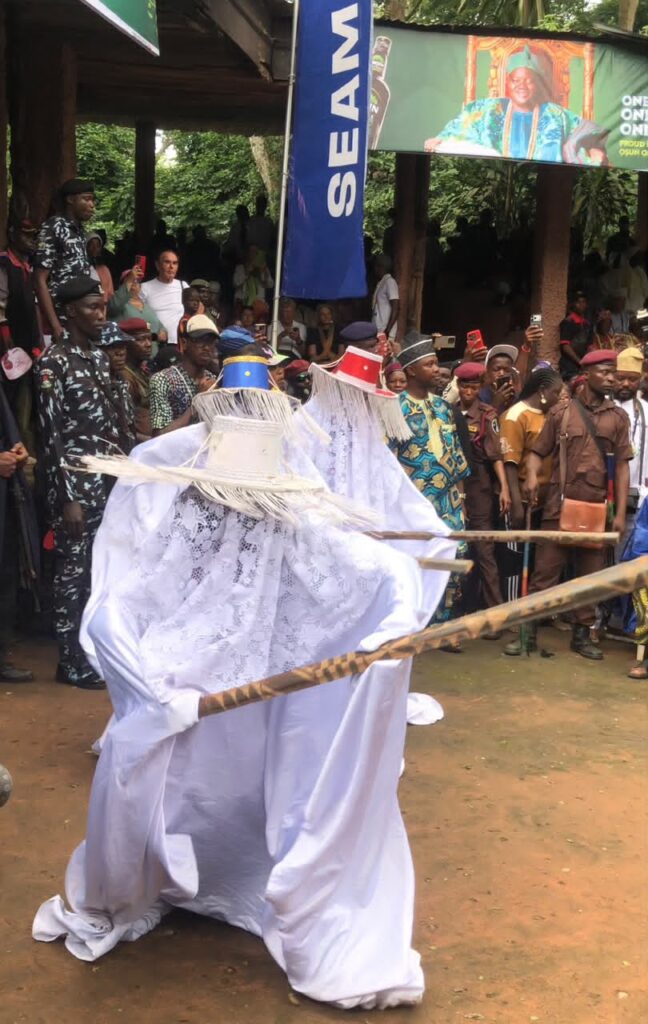
The troupe brought a cultural performance associated with Lagos into a major cultural gathering in Osun. Their performance of the Eyo Dance provided an opportunity for audiences to experience another Nigerian cultural expression.
Eyo itself travelled from Epe to Iperu, then to Lagos to become a significant cultural signature of Lagos. Yet, it is quite important to mention that at the centre of Yoruba cultural or oracular religion is Ifa. It is such that, Eyo play, either for honouring a figure or to appease the land, like Osun votary carriage, cannot take place without Ifa divinity. The interconnected string that strum the Yoruba religious chord in one place means that none of the deity came alone. Their interconnected character has proved the colonial polytheistic placement wrong.
In Yoruba religion, irrespective of the deity a devotee chooses, it is one supreme being. One Olodumare. One journey with multiple destinations.
Who Is Nike Davies-Okundaye?
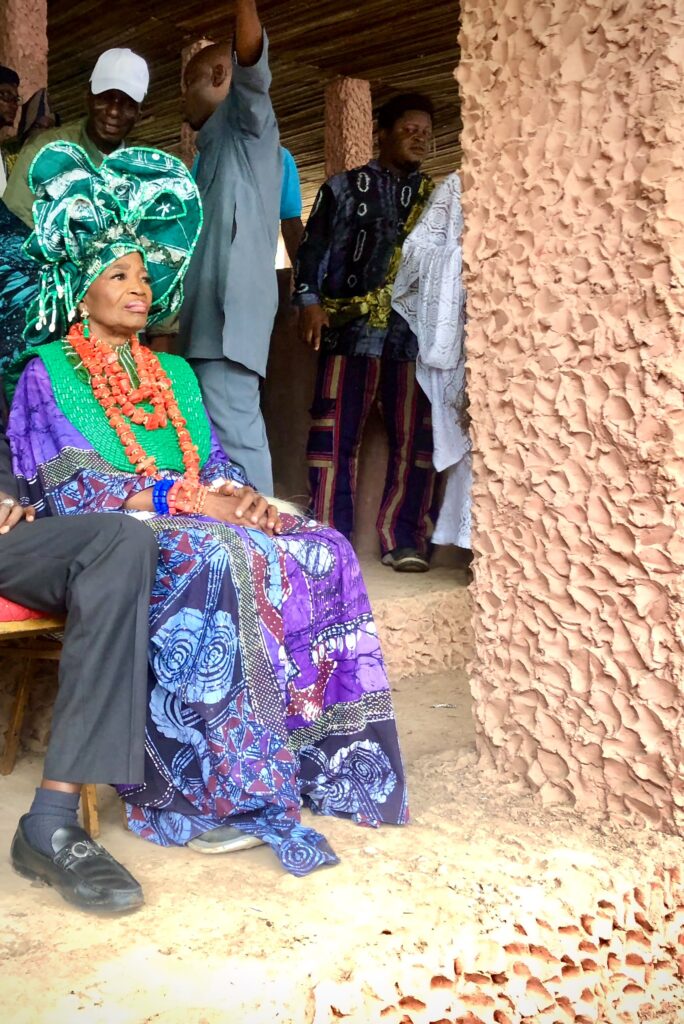
Nike Davies-Okundaye, popularly known as Mama Nike, is a renowned Nigerian artist and cultural advocate whose work has contributed greatly to the promotion of Nigerian cultural heritage.
She is widely associated with Adire textile, traditional crafts, visual arts, cultural education and artistic performances. Through her artistic activities, galleries and cultural initiatives, she has created platforms through which people can experience and learn about Nigerian heritage.
Although she is Lagos-based, her cultural work is not limited to Lagos.
And this is an important lesson.Being based in one state does not mean that your cultural contribution must remain within that state.Artists, cultural practitioners and heritage organisations can travel across Nigeria to share knowledge, participate in festivals and create opportunities for cultural interaction.
Nike Art Dance Troupe at the Osun-Osogbo Festival
During the recently concluded Osun-Osogbo Festival, Mama Nike was present with the Nike Art Dance Troupe from Lagos, and the troupe performed the Eyo Dance.
For someone who does not understand the nature of cultural exchange, seeing an Eyo performance at an Osun festival may raise questions.
But rather than asking only, “What are they doing here?”, we should also ask:
What can we learn from their presence here?
”What is the history of the Eyo Dance?
What does the costume represent?
How has the tradition developed?
What similarities exist between different Yoruba cultural expressions?
How can performances such as this contribute to cultural education?
These questions turn a cultural performance into an opportunity for learning.
Should Culture Be Restricted by State Boundaries?
This is an important question.
Nigeria’s modern state boundaries do not completely define the historical relationships between its peoples and cultures.
Cultural traditions have moved through migration, trade, marriage, festivals, artistic interaction and other forms of social contact.Of course, cultural communities have the right to protect, define and preserve their heritage.
However, cultural appreciation does not mean that traditions must remain isolated.Responsible cultural exchange allows people to experience other traditions while respecting their origins, meanings, custodians and cultural significance.Therefore, the presence of the Nike Art Dance Troupe in Osun does not erase Osun’s cultural identity.
Instead, it creates an opportunity for another cultural expression to be experienced within a different cultural environment.
Why Cultural Exchange Matters
Cultural exchange is important because it creates opportunities for people to understand one another.
A dance can communicate history.
A costume can communicate identity.
A traditional song can preserve memory.
A craft can carry indigenous knowledge.
A festival can bring communities together.
This is why Nigerian cultural festivals should not be seen only as entertainment.They can also serve as platforms for cultural education, heritage preservation, community interaction and tourism development.
Cultural Tourism Is More Than Sightseeing
This is where cultural tourism in Nigeria becomes important.
Tourism is often associated with visiting beautiful destinations, taking photographs and enjoying recreational activities.
But cultural tourism goes much deeper.
It allows people to experience:
- Traditional festivals
- Indigenous dances
- Traditional crafts
- Local cuisine
- Museums and galleries
- Historic sites
- Indigenous knowledge
- Music and storytelling
- Community traditions.
When people travel to experience the Osun-Osogbo Festival, they are not simply visiting a destination.
They are encountering a living cultural heritage.
They are learning.
They are asking questions.
They are interacting with people.
And they are developing a deeper appreciation of Nigeria’s cultural diversity.
The Role of Cultural Tourism in Connecting Nigeria
Cultural tourism can encourage Nigerians to explore cultural heritage beyond their immediate communities.
Someone can travel from Lagos to Osun.
From Ogun to Oyo.
From Ekiti to Ondo.
From Kogi to Kwara.
And from one part of Nigeria to another.
Through these journeys, people encounter different traditions and begin to understand that our diversity does not have to divide us.
It can become a bridge.
A bridge between communities.A bridge between generations.
A bridge between states.
And a bridge between Nigeria’s past and present.
From “What Are They Doing Here?” to “What Can We Learn?”
Perhaps the greatest lesson from the original comment is that we should become more curious about our cultural heritage.
Instead of immediately questioning why a cultural group is present in another state, we can ask:
What cultural exchange is taking place?
What can the audience learn?
What stories are being shared?
What connections exist between these cultural expressions?
Culture Travels. Heritage Connects.
The appearance of the Nike Art Dance Troupe from Lagos at the Osun-Osogbo Festival reminds us that culture is not static.
Our artists travel.
Our traditions interact.
Our festivals create meeting points.
And tourism gives people opportunities to experience these connections.
So, the next time you see a cultural troupe performing outside its home state, don’t only ask:“What are they doing here?”
Ask:
“What can we learn from this cultural exchange?”
Because when we travel beyond our own communities, we do not only discover places.
We discover people.
We discover stories.
We discover traditions.
And sometimes, we discover just how connected our cultures really are.
Final Thoughts
Cultural awareness and cultural exchange are essential to the appreciation, preservation and promotion of Nigerian cultural heritage.
The Osun-Osogbo Festival, the Nike Art Dance Troupe, the Eyo Dance, Adire, traditional arts and other cultural expressions all contribute to a larger conversation about how Nigerians can learn from one another while preserving the uniqueness of their individual cultural identities.
Our states may have geographical boundaries, but our cultural heritage has always travelled beyond them.
Culture travels. Heritage connects. Tourism creates the meeting point.
Written by Professor Akintunde and Àràdámilólá